
Resources · Guidance for families
My Mom/Dad Fell: What Do I Do?
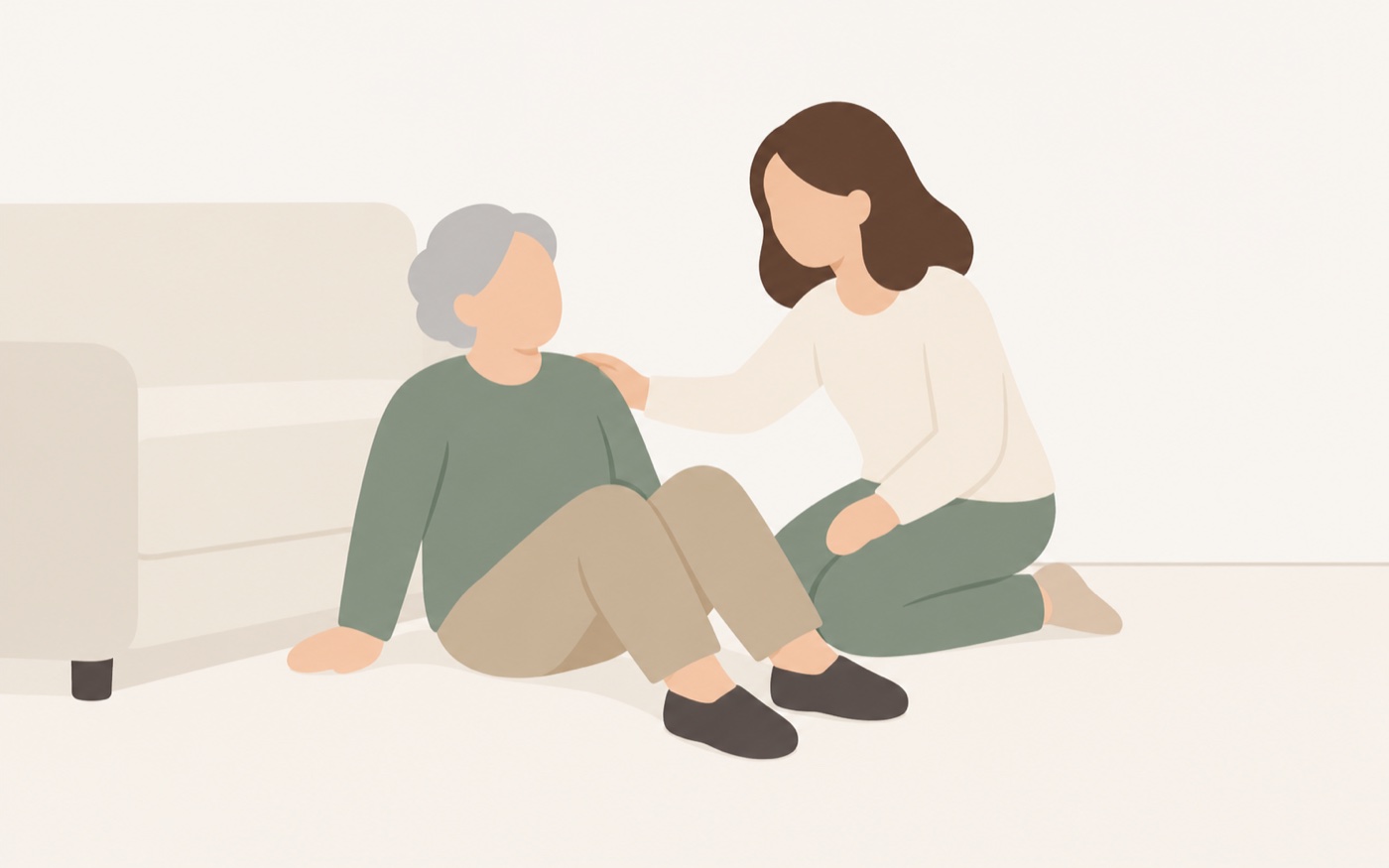
The call usually comes out of nowhere. Mom slipped getting out of the shower, or Dad was found on the kitchen floor and could not get himself up. Your heart drops, and suddenly you have a dozen questions. Here is what to do right away, what to watch for in the weeks that follow, and how to tell when a fall is a sign your parent needs more support than home can give.
Right After the Fall
- Call 911 if anything seems serious. If your parent hit their head, is bleeding, has pain in a hip, back or neck, seems confused, or cannot get up, call for help. Do not try to lift them on your own. You could hurt them, and yourself.
- If they seem okay, take it slow. Let them rest on the floor for a few minutes. When they feel ready, have them roll onto their side, get onto their hands and knees, and use a sturdy chair to push up slowly.
- Call their doctor the same day, even if they insist they feel fine. Some injuries show up hours later, and a fall can be a sign of something else going on, like an infection, low blood pressure, or a medication problem. This matters even more if your parent takes a blood thinner.
- Write down what happened. Note the time, the room, what they were doing, and whether they felt dizzy or lightheaded beforehand. Their doctor will want those details.
In the Days That Follow
Keep a close eye on your parent for the next week or two. Watch for new confusion, headaches, pain that gets worse instead of better, bruising that spreads, or any change in how they walk. Call the doctor if you notice any of these.
Also pay attention to how they feel about what happened. Many seniors hide falls because they are afraid of losing their independence. Others become so worried about falling again that they stop moving around. That sounds safe, but less movement weakens the muscles and balance they need, which makes the next fall more likely.
A follow up visit is a good time to ask the doctor for:
- A review of every medication, including over the counter sleep aids and allergy pills, since many can cause dizziness
- A vision check and an updated glasses prescription
- Physical therapy to rebuild strength and balance. Home health agencies in Tucson can often send a therapist right to your parent's home.
Why One Fall Matters
According to the CDC, about one in four adults age 65 and older falls each year, and falling once doubles the chance of falling again. Falls are the leading cause of injury for older adults. So while a single fall may look like an accident, it is often an early warning worth taking seriously.
Simple Ways to Make Home Safer
- Remove throw rugs and clutter from walkways
- Install grab bars in the shower and next to the toilet
- Add night lights between the bedroom and bathroom, since many falls happen at night
- Keep everyday items on lower shelves so nobody has to climb or reach
- Use non slip mats in the tub and shower
- Make sure your parent wears supportive shoes with good grip, not socks or loose slippers
- Consider a medical alert button they can wear at all times
When Falls Mean It Is Time to Consider Assisted Living
Home safety changes help, but sometimes they are not enough. It may be time to look at Assisted Living in Tucson if:
- Your parent has fallen more than once in the past few months
- They could not get up without help, or were on the floor for a long time before someone found them
- They live alone and nobody is close enough to check on them every day
- They fall at night on the way to the bathroom
- Memory changes mean they forget to use their walker or cane
- You are losing sleep worrying about the next phone call
If several of these sound familiar, the article When Is It Time? walks through other signs families notice and how to start the conversation with your parent.
Common Questions
Should I Take My Parent to the Emergency Room After a Fall?
Call 911 or go to the ER if your parent hit their head, is bleeding, has severe pain, cannot move a limb, seems confused, or cannot get up. If they seem uninjured, still call their doctor the same day, since some injuries take hours to show.
My Parent Keeps Falling but Refuses to Move. What Can I Do?
Start with their doctor and a home safety check, and involve them in every decision. Many families find that visiting an Assisted Living home together, with no pressure, helps a parent see it as gaining support rather than losing independence.